Linux booting process
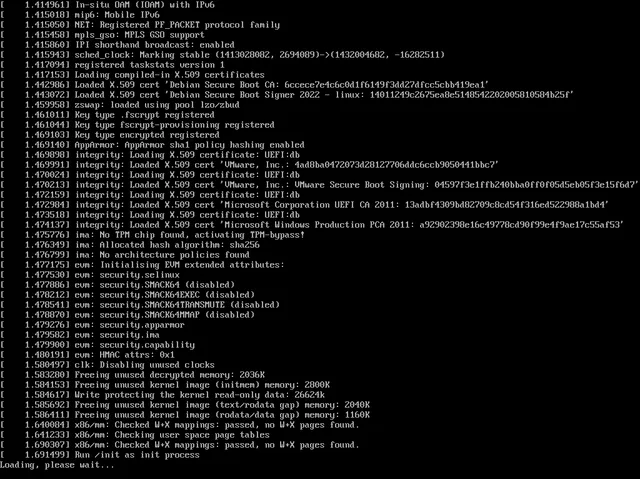
Linux booting process
ConceptOperating Systems

Four-stage process for starting a Linux system

1.25Uncommon
No. 25470Kosmora

Uncommon

Linux booting process

  • Operating Systems

The Linux booting process is a sequence of stages that starts a Linux system. It resembles BSD and other Unix-style boot processes. Its four steps are system startup, the bootloader stage, the kernel stage and the init process. Firmware initializes the system, bootloaders load the kernel image, and the init process begins user-space initialization. Bootloaders and startup systems can vary, including GRUB, systemd-boot, systemd and runit.

Stages
System startup, bootloader stage, kernel stage and init process
Kernel loading
The second-stage bootloader loads the kernel image into memory
Startup alternatives
Traditional init-style scripts, systemd or runit
Sources and credits

Sources and credits

Article
Booting process of Linux (English Wikipedia)
Wikidata
Q1068500
Text
Card text is adapted from the English Wikipedia article by an automated summary. Wikipedia content is available under CC BY-SA 4.0; see the article history for its contributors. CC BY-SA 4.0 · Article history and contributors
Illustration
By Paowee. GPLv2 · File page on Wikimedia Commons
Paowee, Own work. Taken from a VM running Debian Bookworm 12, booting in recovery, to initiate verbose mode.
Modifications: Resized and converted to WebP
Popularity
49 median daily views (Wikimedia Pageviews API (all-access, user agent))

Kosmora is not affiliated with or endorsed by the Wikimedia Foundation.