Reverse migration (immunology)
ConceptCell Biology
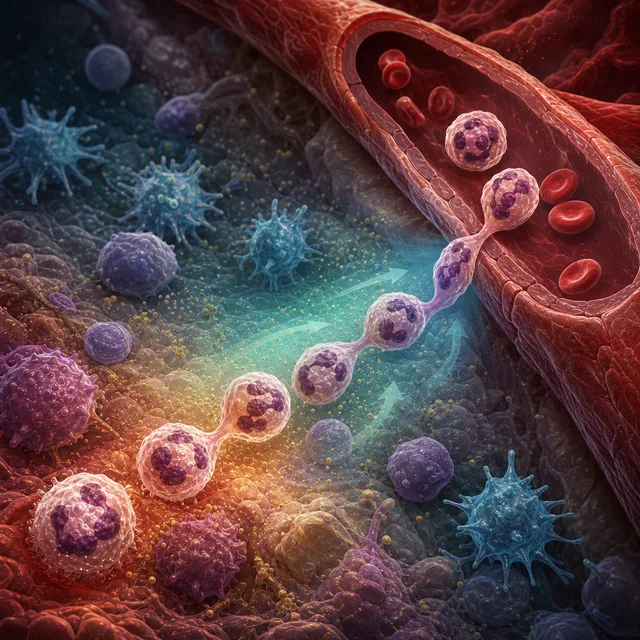
Neutrophil movement away from an inflammation site during resolution.
1.00Common
Neutrophil movement away from an inflammation site during resolution.
Common
Reverse migration is a phenomenon in molecular and cell biology in which some neutrophils move away from an inflammation site, against the chemokine gradient, during inflammation resolution. Inflammatory pathways, including hypoxia-inducible factor, can alter neutrophil migration behavior. Reverse migration may help resolve inflammation by removing neutrophils from an injury site, but returning neutrophils may also contribute to systemic infection. Its regulatory mechanisms remain poorly understood.
The picture on this card was made with AI. It is an illustration, not a real photo of the subject.
Kosmora is not affiliated with or endorsed by the Wikimedia Foundation.